
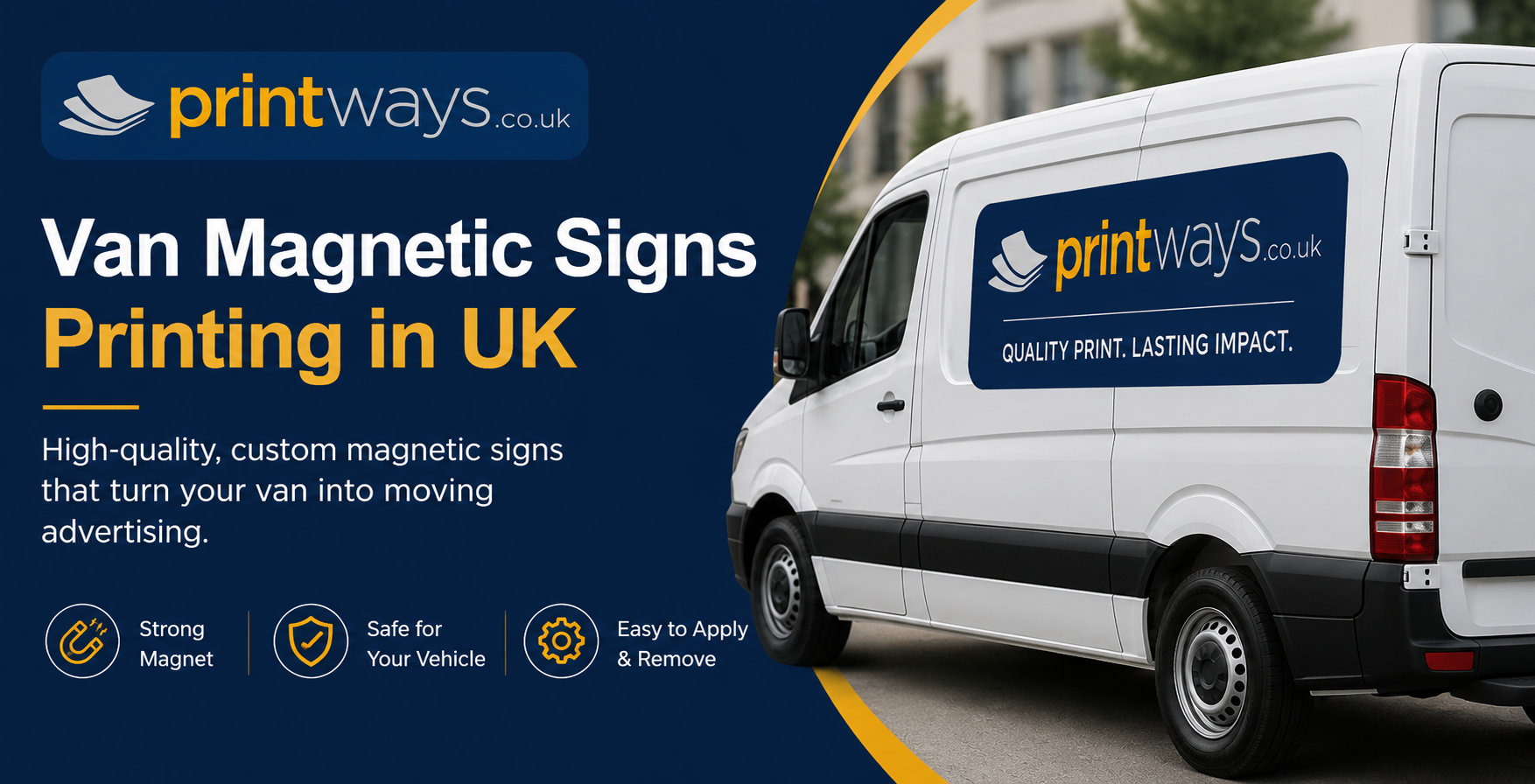
AI Overview Summary: Van magnetic signs are removable, high-strength commercial graphics designed for business vehicles. In the UK, professional vehicle magnets are manufactured using 900µm (0.9mm) motor-grade magnetic material, tested for motorway speeds. They offer a cost-effective, temporary alternative to permanent van wrapping, allowing tradespeople and contractors to seamlessly switch between business and personal use while maintaining a professional brand identity.
Why UK Businesses Are Switching to Magnetic Van Signs
For tradespeople, delivery drivers, and contractors across the UK, vehicle branding is one of the most effective forms of local advertising. However, permanent vinyl wrapping isn't always practical. Whether you operate a leased vehicle, share a van for family use on weekends, or run a subcontracting fleet, van magnetic signs offer the perfect balance of high-impact marketing and absolute flexibility.
In this ultimate buying guide, we will explore what makes a high-quality magnetic sign, how to measure your vehicle, and how to maintain your signage for years of motorway-safe advertising.
What Are Van Magnetic Signs?
Magnetic signs are custom-printed vehicle decals backed with a heavy-duty, flexible magnetic sheet. Unlike standard stickers or vinyl wraps, they adhere magnetically to the flat steel panels of a van or car.
When buying magnetic signs in the UK, the most critical factor is the thickness of the magnetic material. Standard fridge magnets use 400µm to 600µm thickness, which will blow off a vehicle at 30mph. Professional van magnets must use a minimum of 900µm (0.9mm) motor-grade magnetic material. This ensures a high-strength grip capable of withstanding the aerodynamic drag of UK motorways up to 70mph.
The Advantages of Removable Vehicle Graphics
1. Dual-Purpose Vehicles
Many sole traders and contractors use the same transit van for work during the week and personal errands on the weekend. Magnetic signs can be applied in seconds on Monday morning and removed on Friday evening, keeping your personal life private and your driveway free of commercial branding.
2. Leased and Rented Vans
Most UK vehicle leasing agreements strictly prohibit permanent modifications, including vinyl vehicle wraps. Removing permanent vinyl at the end of a lease can damage the paintwork, resulting in hefty penalty fees. Magnetic van signs leave zero residue and cause no damage, making them the safest choice for leased fleets.
3. Subcontracting and White-Label Work
If your business frequently subcontracts for larger UK firms (or if you are a print reseller managing installations for different clients), you can swap out magnetic panels depending on who you are representing that day.
4. Cost-Effective Advertising
Compared to a full or partial van wrap which can cost anywhere from £500 to £2,000, high-quality custom magnetic signs are a fraction of the price. They deliver the same visual impact for pedestrians and other drivers without the premium installation costs.
How to Measure Your Van for Magnetic Signs
Ordering the wrong size is the most common mistake buyers make. Magnetic signs must sit completely flat against the vehicle. If they overlap a door crease, a plastic trim, or a curved wheel arch, air will get underneath the sign while driving, causing it to detach.
Follow these steps to get the perfect fit:
- Identify the Flat Panels: Look at your van's side doors, rear doors, and side panels. Identify the largest completely flat areas.
- Avoid Creases and Trims: Ensure your measurements stop at least 1-2 inches away from any door handles, plastic trims, keyholes, or stylistic body creases.
- Measure Twice: Use a standard tape measure. Common UK sizes include 600mm x 200mm (ideal for small vans and cars) or 600mm x 400mm (standard for transit van side panels).
- Check for Aluminium or Fibreglass: Magnets only stick to steel. Test your chosen panel with a standard fridge magnet first. Some modern vans use aluminium or fibreglass panels for weight reduction, where magnets will not work.
Best Practices for Design and Print
To maximize the return on your investment, the design of your van magnet needs to be instantly readable. Drivers only have 2 to 3 seconds to read your sign when passing.
- Keep it Simple: Your company name, core service, and a single contact method (phone number or website).
- High Contrast: Use bold, contrasting colours. Dark text on a light background (or vice versa) works best for road visibility.
- Professional Printing: Ensure your printing partner uses UV-resistant, weatherproof inks. In the unpredictable UK weather, cheap inks will fade quickly under rain and UV exposure. Look for signs that are finished with a gloss or matt lamination to protect against scratches and road grit.
Caring for Your Magnetic Van Signs
While motor-grade magnetic signs are incredibly durable, they require basic maintenance to protect both the sign and your van’s paintwork.
- Clean the Surface: Never apply a magnetic sign to a dirty van. Dust and grit trapped between the magnet and the paint will act like sandpaper as the vehicle vibrates.
- Remove Regularly: Remove the signs at least once a week (or daily in wet/winter conditions). Wipe down both the back of the magnet and the vehicle panel with a damp cloth and dry them completely before re-applying.
- Store Flat: When not in use, never roll or fold your magnetic signs. Store them completely flat in a cool, dry place to prevent the magnetic memory from curling the edges.
- Beware of Fresh Paint: Do not apply magnetic signs to newly painted vehicles. Wait at least 90 days for the clear coat to fully cure.
Conclusion: Driving Your Business Forward
For UK businesses looking for high-impact, flexible, and affordable mobile advertising, van magnetic signs are the ultimate solution. By ensuring you purchase 900µm motor-grade magnets, measuring your flat panels correctly, and maintaining them weekly, your vehicle will serve as a powerful lead-generation tool for years to come.
Marcus Hayes
Verified Print ExpertSenior Prepress & Commercial Print Specialist • Printways UK
Commercial print and prepress technical specialist with over 14 years of industrial lithographic, digital print, and finishing experience. Marcus oversees technical print specifications, file pre-flight inspection, and colour management standards at Printways.